
Surprise & Delight Marketing: When Surprise Becomes the Expectation
Surprise is one of the most powerful emotions a brand can use. It stops people mid-scroll, breaks routine, and creates moments where a customer leans in, even if only for a few seconds, and pays attention. That is a big deal in a world where attention is constantly being pulled in several different directions.
That is also why surprise and delight marketing has become such a popular approach. Marketers love it, customers love it, and it often produces immediate wins. When successfully implemented, people feel appreciated, they share their experience, the brand feels human, and it creates a story worth repeating.
The challenge is that surprise does not stay a surprise forever.
Why Surprise Gets Attention So Fast
Surprise is powerful because it interrupts predictability. It is a reaction to something unexpected. People move through their day on autopilot more often than they realize. Customers follow patterns when they shop, make decisions, and interact with brands. Familiarity makes life easier, which is part of the reason habits form so quickly. In these cases, surprise breaks the pattern.
A free upgrade, an unexpected note tucked into a package, a personal message after a purchase, or even an unexpected “we noticed you” moment can create an instant emotional response. It changes the tone of the relationship and makes a customer feel like they matter beyond the transaction.
Why Delight Is Not Just a “Nice Feeling”
In and of itself, Surprise isn’t necessarily a good or a bad thing. What matters is what emotion joins Surprise when it happens. Delight is the emotional result of surprise when it lands the right way, pairing it with Joy. Delight can look like happiness, gratitude, and excitement. It can also look like relief or pride. Sometimes it simply looks like someone telling a friend, “You will not believe what they did.”
That emotional lift matters because customers do not build long-term relationships with brands on function alone. Customers build relationships when the experience creates confidence and a sense of belonging.
When Surprise Becomes the Expectation
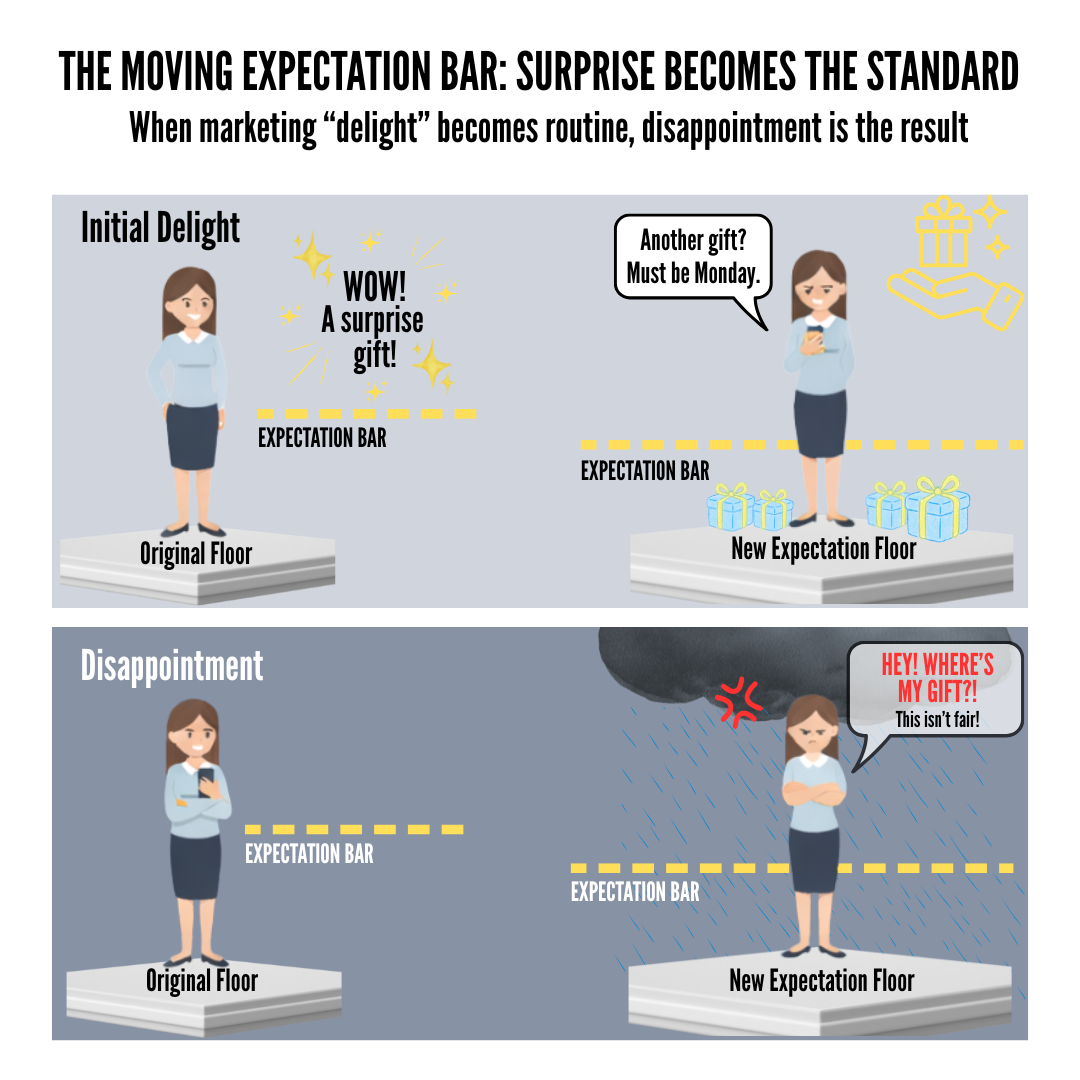
However, Surprise has an expiration date, even when customers enjoy it. At first, the customer is caught off guard in the best way. The experience feels special, rare, and memorable. However, over time, the customer begins to associate the brand with that feeling and expects the same type of experience to continue. This shift is subtle, which is why brands miss it.
The surprise becomes part of the story that the customer tells themselves.
“I’ll wait to see what extra perk they’re offering before I buy.”
“I plan my purchases around their promotions/giveaways.”
That belief sounds like a win, and often it is, but that belief also creates a new baseline. The customer starts to treat the constant use of surprise as normal instead of exceptional. In other words, when surprise is delivered on a schedule, you aren’t truly delighting your customers anymore; you are fulfilling a contract. And this contract may be unsustainable.
How Disappointment Shows Up Even When Brands Deliver
Many brands assume disappointment comes only from failure. Maybe the product did not work, the service was bad, the support team was unhelpful, or the delivery was late. Those problems are the obvious ones.
Disappointment, actually the combination of Surprise and Sadness, can also come from unmet expectations, even if the brand technically delivered what was promised. For example, a customer who has been surprised joyfully over and over again begins to expect more. In this case, they may start looking for the next perk, the next special moment, or the next added bonus. The brand unintentionally trains the customer to anticipate this emotional high point. And now their Surprise is not due to the brand’s exceptional moments, but rather the lack of them altogether.
Then one day, the surprise is not there.
The customer receives a normal experience. Nothing is wrong or broken…the brand just did what it said it would do. Now, you have a customer who is used to walking away feeling at their highest, and in this situation, walks away feeling less excited, less connected, and sometimes even disappointed. All because they were expecting a joyful surprise that wasn’t delivered.
The Emotional Gap
Disappointment lives in the space between what customers expect and what they experience. When surprise and delight marketing works well, it raises the customer’s emotional baseline. The next time they engage with your brand, they are not just hoping for a solid experience. They are anticipating that extra moment of thoughtfulness that made them feel seen.
Expectation vs. experience
When that “wow” moment is missing, the experience can still be perfectly fine on paper, yet emotionally it feels like a letdown. Nothing went wrong, but something felt different. The customer might not complain or leave a negative review. They simply walk away thinking, “That wasn’t as good as what I’ve come to expect.” That small emotional drop matters, since it shapes what they believe your brand is becoming.
Why Brands Cannot Keep Surprising Forever
Surprise is powerful, but it’s also hard to scale. Surprise & delight marketing can become a treadmill. For example, a brand sees results from unexpected perks, so the team keeps looking for the next “wow” moment. The reward has to feel bigger, effort has to feel more impressive, and the experience has to feel more memorable than last time.
That cycle is difficult to sustain, and it becomes risky over time. When surprises happen repeatedly, customers start building them into the standard they expect going forward. The more customers experience “extra,” the more standard delivery starts to feel like “less.” A brand can deliver the same value and still feel like it is declining, simply because the customer’s emotional baseline has shifted upward, and over time, this has become their expectation.
Surprise Is the Moment, Expectation Is the Long Game
Surprise gets attention quickly, and that attention creates an opportunity to delight. Delight can build connection, and that can grow into trust. In that, trust can shape expectations that customers anticipate and rely on.
Surprise & delight marketing works best when surprise stops being the entire strategy and becomes the beginning of something bigger. Brands win when customers feel confident, cared for, and consistently valued. It is important they remember that surprise is a moment, and trust is what lasts.
Is your brand too reliant on Surprise, not letting customers know what they should anticipate from you? Or are you setting the bar at an unsustainable level? The Rational Heart can help! Understanding if Surprise is your brand’s golden ticket or crutch is the first step in building a strategy to set the right expectations for your brand.
At The Rational Heart, we understand that emotions are at the core of successful business strategies. Consumers make decisions influenced by both logic and emotion. By quantifying emotional responses through our proprietary behavioral economics approach, we provide your business with a strategic advantage. Trust in The Rational Heart to turn emotional insights into impactful business strategies. Contact us today to discover how we can help your business thrive!